Best business credit cards for sole proprietors

- What is a sole proprietorship?
- Can you get a business credit card as a sole proprietor?
- Best business credit cards for sole proprietors
- How to choose a business credit card as a sole proprietor
- Why sole proprietors should use business credit cards
- How to apply for a business credit card as a sole proprietor
- Consider Ramp once your business is established
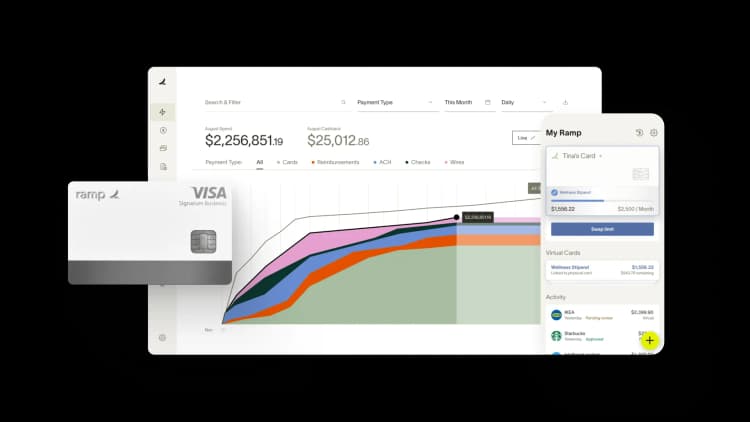
Running a business as a sole proprietor makes it harder to keep finances clean, especially when personal and business expenses end up on the same card. You don't need an LLC or corporation to qualify for a business credit card, and many issuers allow you to apply using your Social Security number.
Choosing the right card can help you separate expenses, earn rewards on everyday spending, and build a stronger financial foundation for your business.
Note: The cashback percentages, limits, fees, and other figures mentioned in this article are for illustrative purposes only. They do not represent guaranteed or expected rates. Actual terms, credit limits, rewards, and approval criteria vary by card issuer and may change at any time. Readers should verify current details directly with each issuer before applying.
What is a sole proprietorship?
A sole proprietorship is the simplest type of business structure, where you and your business are legally the same entity. There's no formal separation between your personal and business finances, which means you're personally responsible for any debts or obligations the business takes on.
Most freelancers, consultants, and independent contractors operate as sole proprietors by default, even if they've never formally registered a business. From a credit card issuer's perspective, this structure is common and well understood, which is why many business credit cards are available to sole proprietors without requiring incorporation.
Can you get a business credit card as a sole proprietor?
Sole proprietors can get a business credit card using their Social Security number and personal address, even if they don't have a registered business.
Most small business owners don't have the business credit history to avoid a personal guarantee to qualify for a credit card. Some business credit cards for sole proprietors may ask for proof of income during the application process, which you can provide through tax returns or business bank account statements.
Do sole proprietorships need separate credit cards?
As a sole proprietor, it's a good idea to use a dedicated credit card for business expenses so you can easily track costs and calculate your business tax deductions. Using a personal credit card for business expenses puts your personal assets and credit score at risk and makes it hard to distinguish your personal expenses from business purchases.
Can I get a credit card for a self-employed business?
Business credit cards aren't limited to large corporations. You can qualify for a business credit card without an LLC or formal incorporation, and many cards are built for small operations, including sole proprietors, freelancers, and gig workers who are self-employed only part-time.
Best business credit cards for sole proprietors
The right business credit card depends on your spending habits, credit profile, and what you want the card to help you accomplish. The options below are grouped by primary benefit to make it easier to compare them based on how you plan to use them:
| Card | Best for | Annual fee | Rewards rate | Standout feature |
|---|---|---|---|---|
| Chase Ink Business Cash | Office expenses | $0 | 5% on office supplies, internet, and phone; 1% all other | 0% intro APR for 12 months |
| Chase Ink Business Unlimited | Flat-rate cashback | $0 | 1.5% on all purchases | No category tracking required |
| American Express Blue Business Cash | Everyday spending | $0 | 2% up to $50,000, then 1% | Expanded Buying Power |
| Ink Business Preferred | Travel and business services | $95 | 3x points on travel, shipping, and advertising | Point transfers to airline and hotel partners |
| Capital One VentureOne Business | Travel rewards | $0 | 1.5x miles on all purchases | No annual fee or foreign transaction fees |
| Capital One Spark 1% Classic | Building credit | $0 | 1% on all purchases | Fair credit accepted |
| Ramp Corporate Card | Expense management (LLC/Corp only) | $0 | Cashback rewards on purchases | Automated spend controls and receipt matching |
| Secured business cards | No credit history or damaged credit | Varies | Varies | Refundable deposit becomes credit limit |
Best for cashback rewards
Chase Ink Business Cash Credit Card

- If you spend a lot on office supplies or on internet, phone and cable services, this card caters to that
- Cardholders are automatically checked for a credit line increase every 6 months or sooner
- The card offers 5% cash back on Lyft rides through September 2027
- Earn 1% cash back on all other purchases with no limit
- Bonus cash back categories are capped at $25,000 in combined purchases per account anniversary year
- A foreign transaction fee of 3% is charged on purchases made outside the U.S.
- Cash back rewards are limited to 1% on all purchases outside the bonus categories
- 10% Business Relationship Bonus is only available if you have a Chase Business Checking account on your first card anniversary
The Chase Ink Business Cash card works well if you spend heavily on office-related expenses. You get elevated cashback on common categories like internet, phone service, and office supplies, which makes it a good fit for predictable monthly costs.
With no annual fee and a generous welcome bonus, this card provides solid value without adding overhead. The introductory 0% APR period can also help if you're managing upfront expenses or making a larger purchase.
Chase Ink Business Unlimited Credit Card

- No annual fee
- Introductory APR supports large upfront expenses
- Simple rewards program with 1.5% cashback on all purchases
- Elevated 5% cashback on Lyft rides
- Foreign transaction fees apply
- Rewards structure may not suit category-specific spending
If you want simplicity, Ink Business Unlimited earns a flat cashback rate on every purchase. That works well when your spending doesn't fall neatly into bonus categories.
There's no annual fee and no category tracking required, so the card is easy to manage day to day. The welcome bonus and introductory 0% APR period add extra value for new cardholders.
American Express Blue Business Cash Card

- 2% cashback on purchases up to first $50,000, then 1% thereafter
- Employee cards, QuickBooks integration, and automated bill pay via BILL
- Acount alerts for irregular spending activity on employee cards
- No annual fee, plus 0% intro APR for first 12 months
- Expanded Buying Power lets you spend beyond your credit limit
- $50,000 annual limit on 2% cashback
- Not ideal for businesses with significant spending needs
- 2.7% foreign transaction fee
- Requires good to excellent credit
The American Express Blue Business Cash card earns a higher cashback rate on all purchases up to an annual cap, then drops to a lower rate once you exceed it. It's built for straightforward, everyday spending.
If you have moderate, consistent expenses and want predictable rewards without worrying about rotating categories or bonus limits, this card fits. No annual fee and an introductory APR period make it accessible for early-stage sole proprietorships.
Best for travel rewards
Ink Business Preferred Credit Card

- High earning potential: 3x points on certain business expenses
- Flexible rewards: Ultimate Rewards® points can be redeemed for travel through Chase, transferred to airline and hotel partners, or used for other travel expenses.
- Extra benefits: Includes travel insurance, purchase protection, and cell phone protection.
- Annual fee: $95 annual fee may not be suitable for all businesses.
- Low credit limit: The Chase Ink Business Preferred credit card typically starts with a credit limit of $5,000.
- Spending limit on bonus categories: 3x points are capped at $150,000 per year, which may limit rewards for high-spending businesses.
If you're looking for business travel rewards, Ink Business Preferred earns bonus points on travel, shipping, advertising, and internet services. Point transfers to airline and hotel partners give you flexibility in how you redeem.
The $95 annual fee can pay for itself if you regularly spend in bonus categories or redeem points for travel. No foreign transaction fees make it a practical choice for international travel as well.
Capital One Venture X Business Card

- Extensive travel benefits
- No fees for international transactions
- Transferable miles to travel partners
- High annual fee
- Benefits may not justify the cost for non-travel-focused businesses
Capital One VentureOne Business earns 1.5x miles on every purchase, making it easy to accumulate travel rewards regardless of spending category. If you want travel rewards without paying an annual fee, this card fits.
You can redeem miles for travel purchases or transfer them to 15+ airline partners. No foreign transaction fees make it a practical choice if you travel or spend internationally.
Best for building credit
Capital One Spark 1% Classic

- Unlimited 1% cashback on all purchases
- Unlimited 5% cashback on hotels and rental cars booked through Capital One Travel
- No annual or transaction fees
- Fair credit scores accepted
- Cashback rewards are slightly less than average
- High APR
Capital One Spark Classic accepts fair credit, which makes it a practical option if you're establishing or rebuilding your credit profile. The rewards rate is lower than premium cards, but the card reports to business credit bureaus, helping you build business credit over time.
If you don't yet qualify for higher-tier business credit cards, this card can be a starting point for separating business expenses and building credit history.
Secured business credit cards
Secured business credit cards require a refundable security deposit that typically becomes your credit limit. These cards are intended for sole proprietors with damaged credit or no credit history who need a path toward approval.
With consistent, on-time payments, many secured cards allow you to transition to an unsecured card after 6–12 months. This makes them a useful stepping stone toward better credit options in the future.
Best for expense management and automation (for future LLCs)
Ramp Business Credit Card

- Higher credit limits: Up to higher than traditional cards, based on revenue and funds raised
- Flexible qualification: Uses sales data from platforms like Stripe, Shopify, and Amazon (1 year of history)
- Exclusive partner rewards: $350K+ in rewards from vendors like UPS, OpenAI, AWS, and more
- Simplified spend control: Customizable expense policies, limits by vendor/category/transaction, automated flagging
- Comprehensive financial tools: Expense management, reporting, integrations, travel booking, and AP automation
- Eligibility: Only available to corporations, LLCs, or LPs; sole proprietors are ineligible
- Cash on hand: U.S. applicants need $25,000 in a business bank account
- Balance transfers: Balance transfers are not supported
The Ramp Corporate Card combines cashback with advanced features like automatic receipt matching, real-time spend controls, and direct accounting software integrations. As a charge card, it's built for you if you want more control and automation around spending.
Ramp is best suited if you've outgrown basic credit cards and need stronger visibility into expenses across vendors, categories, or time periods.
Ramp requires an established business entity, such as an LLC or corporation, and is not available to sole proprietors. It's a natural next step when you're ready to scale beyond entry-level credit card features.
How to choose a business credit card as a sole proprietor
With several solid options available, the right card comes down to how you spend, what rewards matter to you, and where you are in building your credit profile.
Your credit score
The most attractive small business credit cards require good to excellent credit, typically a FICO score of 670 or higher. Be sure to check your credit score before applying and narrow your search to cards that offer you good approval odds.
Here's how your score maps to the cards reviewed above:
- Fair credit (580–669): The Capital One Spark 1% Classic and secured business credit cards are accessible options at this level. Both can help you build credit over time while keeping your business expenses separate.
- Good credit (670–739): Most mainstream business credit cards are within reach, including the Chase Ink Business Unlimited and the American Express Blue Business Cash. These offer stronger rewards rates and 0% intro APR periods.
- Excellent credit (740+): Premium cards like the Ink Business Preferred become available, offering higher earning potential and travel benefits that justify their annual fees.
Your business expenses
Many business credit cards offer bonus rewards for spending in certain categories. If fuel is one of your biggest expenses, for example, you should strongly consider getting a gas credit card. Selecting a card that gives you elevated rewards for your most frequent expenses will maximize your benefits.
Fees and interest rates
Pay your balance in full every month to avoid interest charges. Look for credit cards with no activation, annual, or monthly fees. Compare intro APR rates, regular interest rates, and fees for balance transfers to find the most favorable card offers.
Examples of business credit cards with favorable fees for sole proprietors include the Blue Business Plus card from American Express and the Capital One Spark 1% Classic for Business, both of which have no annual fees for card membership. Understanding the different types of business credit cards can help you narrow your options. If you frequently travel internationally, consider a business credit card with no foreign transaction fees.
Rewards and membership benefits
Cashback rewards can be lucrative, and signup bonuses provide extra membership rewards when you spend a certain amount within a specific timeframe after your account opening.
For example, the Chase Ink Business Unlimited credit card offers hundreds of dollars in cashback rewards if you spend a certain amount in your first 3 months. Alternatively, the Amazon Business Card from American Express is a great option for sole proprietors with lower spending needs who prioritize shopping with Amazon.
Beyond the rewards program itself, consider the full range of card membership benefits. If you're planning to make a large business purchase, a card that offers an introductory 0% APR period would be a good choice. If you frequently travel internationally, look for a business credit card with no foreign transaction fees.
Integrations and automation
Look for business credit cards that integrate with finance automation software to simplify financial tracking, bookkeeping, and accounting processes. As a sole proprietor, you may not have employees or contractors to pay, but you're still obligated to report your income for tax purposes, which can take hours or even days if you aren't prepared.
Discover Ramp's corporate card for modern finance
Why sole proprietors should use business credit cards
Business credit cards give sole proprietors practical advantages that personal cards don't. They make it easier to stay organized, manage cash flow, and prepare for taxes while earning rewards on everyday business spending.
Separate business and personal expenses
Using a dedicated business credit card keeps your finances clean from the start. Every transaction creates a clear record that makes it easier to track business expenses, simplifies bookkeeping, and cuts the time you spend on tax preparation.
Mixing business purchases into a personal credit card can create problems later. It makes deductions harder to identify, increases audit risk, and blurs the line between personal and business finances when you need clarity most.
Build business credit
Some business credit cards report activity to business credit bureaus, which helps establish a credit profile tied to your business. Over time, that history can make it easier to qualify for loans, higher limits, or better vendor terms.
Most business cards still require a personal guarantee, so missed payments can affect your personal credit. Used responsibly, though, business cards help you build credit without relying entirely on personal accounts.
Earn rewards on business spending
Your business expense categories can generate meaningful returns when you use the right card. Software subscriptions, advertising, office supplies, and travel can all earn cashback or points that offset everyday costs.
| Reward type | Best for | Typical earning rate |
|---|---|---|
| Cashback | Simple, predictable savings | 1.5–5% by category |
| Points | Flexible redemptions and travel | 1–5x points per dollar |
| Miles | Frequent business travel | 1–3x miles per dollar |
As an example, $2,000 in monthly expenses earning 1.5% cashback adds up to $360 per year, enough to cover several recurring business tools.
Manage cash flow more effectively
Irregular income and delayed payments are common for sole proprietors. Business credit cards help bridge those gaps by giving you short-term flexibility without turning to loans or personal savings.
Many cards offer 0% introductory APR periods of up to 12 months, which can be useful for large purchases. Business cards also tend to come with higher credit limits than personal cards, providing more breathing room as your expenses grow.
A business credit card can also serve as a buffer for large one-time purchases, such as equipment, inventory, or software licenses, that you'd rather spread across a billing cycle instead of paying out of pocket upfront.
Simplify expense tracking and tax preparation
Most modern business credit cards integrate with accounting software and automatically categorize transactions. This reduces manual data entry and keeps your books up to date throughout the year.
When tax season arrives, categorized transactions and year-end summaries make it easier to claim deductions accurately. Instead of sorting through months of receipts, you have organized records ready to go.
When you keep business purchases separate from personal ones, you spend less time splitting out costs for tracking and reporting. The right card can save you hours each month by automating expense reports and keeping records organized throughout the year.
How to apply for a business credit card as a sole proprietor
Applying for a business credit card as a sole proprietor follows a similar process to applying for a personal credit card.
- Do your research: Identify credit cards that are open to sole proprietors, and eliminate those with unfavorable terms
- Gather required information: Collect necessary documentation such as your tax ID number (either your employer identification number or Social Security number) and financial documents that prove your income
- Complete the credit card application: Fill out the online application. If you have all the required information readily available, you can fill most out in less than 30 minutes.
- Wait for results: Some credit card issuers offer immediate decisions, while others require manual review. Once approved, you can use a digital card while waiting for the physical card to arrive.
EIN vs. SSN: Which should you use?
You can apply for most sole proprietor business credit cards with just your Social Security number. However, getting an Employer Identification Number (EIN) is free and takes just a few minutes on IRS.gov, and the EIN is issued immediately upon completion.
An EIN isn't required, but it's worth considering. It protects your SSN from overexposure on business applications, establishes a separate business identity for credit purposes, and simplifies an eventual transition to an LLC if your business grows. An EIN also makes it easier to claim tax deduction strategies for sole proprietors that require clear separation of business and personal records.
What credit score do you need?
A FICO score of 670 or higher generally gives you strong approval odds for most business credit cards. If your score falls in the fair credit range (580–669), options like the Capital One Spark 1% Classic and secured business cards can help you get started and build credit over time.
Keep in mind that the application creates a hard inquiry on your credit report, which causes a small, temporary decrease in your score. Applying for multiple cards in a short window can compound that effect, so it's best to narrow your options before submitting an application.
Personal guarantee
Most business credit cards for sole proprietors require a personal guarantee. This means you're personally responsible for the balance if the business can't pay. This is standard and expected for sole proprietors, since there's no legal separation between you and your business.
A personal guarantee doesn't mean you've done anything wrong or that the card is risky. It reflects the nature of the sole proprietorship structure, where your personal and business finances are one and the same. Despite this requirement, the benefits of having a business credit card as a sole proprietor still outweigh the added responsibility for most business owners.
Consider Ramp once your business is established
Ramp's corporate charge cards offer an alternative to traditional business credit cards. If you have an EIN and a US business checking account, you could qualify for Ramp.
Our cards have built-in features that track and report business expenses, while also helping you build business credit. Ramp is suitable for all business structures, with unlimited free physical and virtual cards for employees if you decide to expand your team.
Try our interactive demo to see how Ramp can help your business save on spending.

FAQs
Yes. Most major issuers accept sole proprietors. You can apply using your Social Security number and personal credit history without an EIN or formal business registration.
A FICO score of 670 or higher gives you strong approval odds for most business credit cards. Options for fair credit (580–669) include the Capital One Spark Classic and secured business cards. Premium cards typically require 740 or above.
The initial application creates a hard inquiry on your personal credit report. Most business cards require a personal guarantee, so missed payments can damage your personal score. Regular spending and on-time payments typically don't report to personal bureaus, which protects your utilization ratio.
No. You can apply with your SSN as a sole proprietor. Getting an EIN is free, takes just a few minutes at IRS.gov, and helps protect your SSN while establishing a separate business identity.
For most sole proprietors, yes. Business credit cards separate personal and business expenses (simplifying tax prep), build business credit history, earn rewards on business spending, and provide better cash flow management through higher limits and intro APR periods.
No. Ramp serves businesses in the United States and Canada, and neither application requires a personal guarantee or credit check. U.S. applicants must have a registered corporation, LLC, or LP, an EIN, and at least $25,000 in a business bank account. Canadian applicants must be registered in a supported province with at least CA$25,000 across their connected accounts. See Ramp’s Canadian eligibility requirements for the full details.


“Invoices, cards, tokens. The categories change but the principle doesn't: know where the money is going, remove the work around it, and make sure the spend is worth it.”
Maciej Mylik. Finance
ElevenLabs

“There's just no surprises anymore. No more waiting two months to find out how a job did. We know how it's doing as it's happening.”
Erich Kuss
Financial Systems Manager, Infinity Home Services

“More token spend isn’t proof that AI is working. Less isn’t proof that it isn’t. What matters is whether we’re buying the right level of intelligence for the work. Ramp lets us make that judgment in the same place we manage every other type of spend.”
Cody Nutt
Senior Director of Business Systems, Daxko

“Most banks treat the back office as a cost to keep down. We treat ours as a return to compound, which is why we run it on Ramp. Now we put our clients on Ramp, too.”
Patrick Gaughen
President & COO, Hingham Institution for Savings

“Browserbase builds infrastructure so AI agents can do real work. Ramp is doing the same for finance. It’s not another tool. It’s a system purpose-built for AI-driven finance, and that’s why we chose Ramp as our financial operating system from day one.”
Paul Klein IV
Founder & CEO, Browserbase

“We used to pay up to $20k a year for our AP platform. With Ramp, we’re earning back well over that amount. That's money that belongs to the mission now, not to the back-office software.”
Heidi Coffer
Chief Financial Officer, Boys & Girls Clubs of San Francisco

“The tricky thing about corporate travel policy is timing. We didn't need a stricter policy. We needed the policy to show up earlier. With Ramp Travel, it finally does.”
Keith Frantz
Director of Enterprise Risk Management, Prosper

“We're accountable to our funders, our partners, and the families we serve. That accountability starts with how we manage every dollar. Ramp makes it easy for our team to spend wisely, track in real time, and keep overhead low so more resources reach the families navigating infertility.”
Rachel Fruchtman
CFO, Jewish Fertility Foundation
